There is nothing quite like waking up at 3:00 AM in a tent in July, drenched in sweat, listening to the girls toss and turn next to you, wondering if you made a terrible mistake. I remember that night vividly. We were in a state park in Arkansas, and the humidity was so thick you could chew it. The tent we bought for $40 at a big-box store felt like a sauna, and Junie was crying because she couldn’t sleep. That night taught me a hard lesson: cheap gear is great until the weather turns, and in the summer, heat is the enemy.
If you are reading this, you probably want to get outside without breaking the bank, but you’re terrified of melting. You want summer camping tips budget families can actually use, not just “buy a $500 tent” advice. I’ve spent the last five years figuring out how to keep us cool, safe, and sane on a single income. It isn’t about luxury; it’s about strategy. Here is exactly what works when the mercury rises.
Pick Your Campsite Like a Pro
The biggest mistake families make is picking a campsite based on price or proximity to the bathroom, ignoring the sun. When you are camping on a budget, you often can’t reserve the premium spots, but you can still scout for shade.
The North-Facing Rule
In the Northern Hemisphere, the sun moves across the southern sky. If you can find a campsite that faces north, you get shade for most of the day. I use Google Maps satellite view before we even leave the house. I look for tree cover that blocks the southern exposure. It sounds technical, but it saves us from setting up a tent that bakes us by noon.
Water Proximity
Being near water is a massive cooling hack. Even if you aren’t swimming, the air near a lake or river is often cooler. State parks usually have campsites right on the water that are cheaper than the ones deep in the woods. We prioritize these spots. The breeze off the water helps circulate air through the tent, which is crucial when you don’t have AC.
The “Sienna” Strategy
If you are staying in a dispersed camping spot (free camping on public land), you have to be your own site manager. We arrive early in the morning to set up while it is cool. Then, we close the tent flaps and go do something else. We hike, we swim, or we drive to a local library to cool off. We don’t sit in the tent during the peak heat hours (11 AM to 4 PM). This is the single most effective summer camping tips budget hack I have learned. It costs nothing but time.
 Photo: Alfo Medeiros
Gear That Actually Cools (And What to Skip)
This is where I get opinionated. I have bought enough gear to fill a warehouse, and I have thrown away enough cheap plastic to fill a landfill. When it comes to heat, you need airflow.
The Tent: Mesh is Non-Negotiable
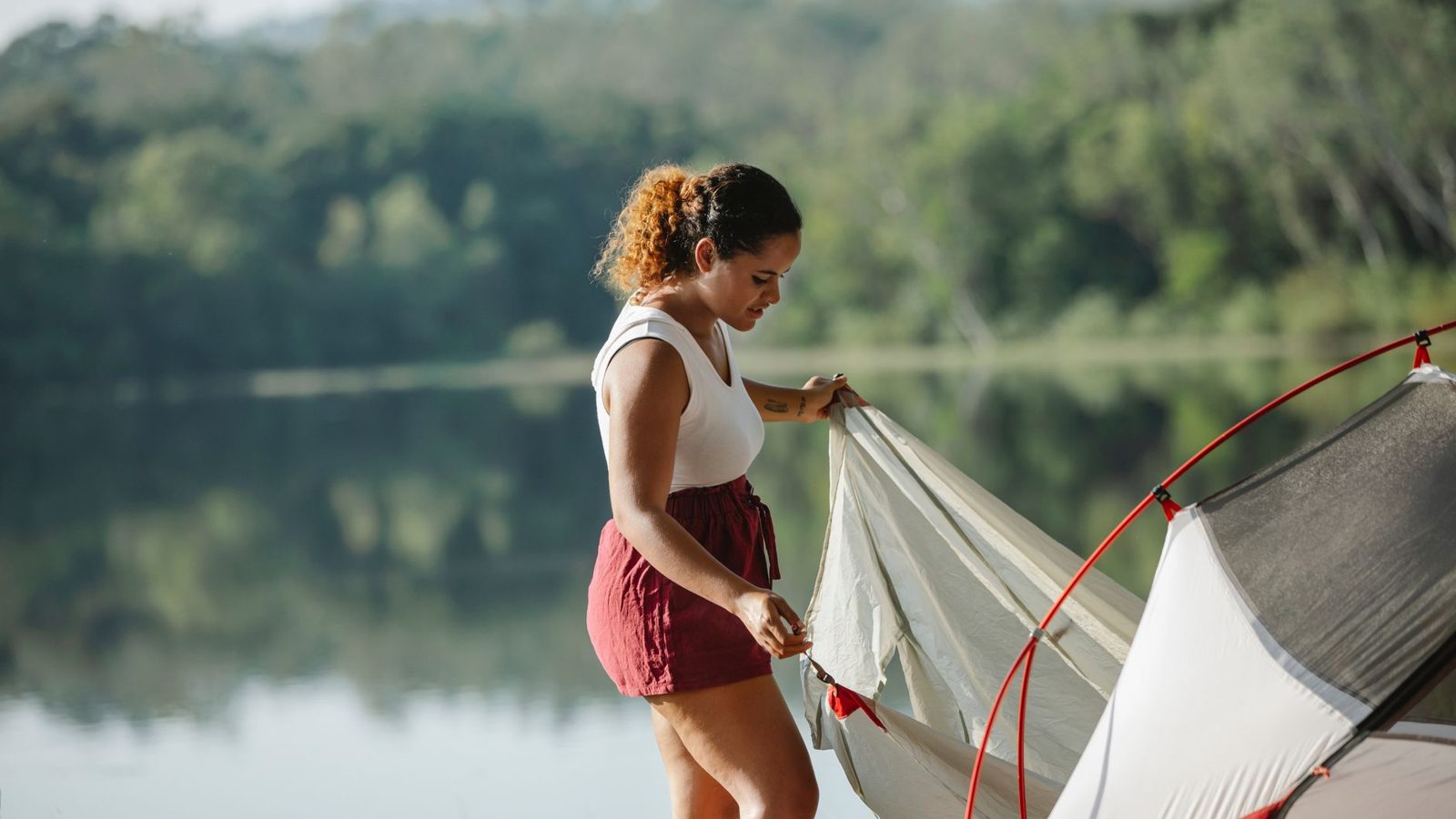
You do not need a heavy-duty canvas tent. You need a tent with mesh walls. I know the instinct is to buy the cheapest solid nylon tent to keep bugs out, but in the summer, that solid wall traps heat.
I recommend looking for a tent with a “rainfly only” setup. This means the main body of the tent is mesh, and the rainfly covers the top but leaves the sides open for air. It keeps the rain off but lets the breeze in.
- Easy setup
- Good airflow with rainfly
- Not great in heavy wind
- Zippers can stick
This tent has been our workhorse. It isn’t fancy, but the mesh panels allow air to flow through. We bought this three years ago, and it has survived two summers with the girls. The key is to keep the rainfly up during the day to block direct sun, but leave the mesh walls exposed.
The Fan: Power is Key
A battery-powered fan is the best investment you can make for summer camping. It costs more upfront than a hand-crank fan, but it is worth every penny. Hand-crank fans are great for emergencies, but you don’t want to be cranking a fan while trying to sleep.
I use a 12V fan that plugs into a small portable battery pack. We charge the battery pack at home or at a campsite with electricity. It runs for about 10 hours on low, which is enough to get us through the night.
- Portable
- Quiet operation
- Long battery life
- Needs charging
- Small coverage area
We hang this from the tent ceiling using a carabiner. It creates a breeze that makes a massive difference. If you are on a tight budget, look for a generic brand on Amazon, but check the reviews for battery life. I’ve had cheap ones die in two hours, which is useless. Spend the extra $10 for a brand with better battery specs.
Sleeping Gear: Breathability Over Warmth
In the winter, we use thick sleeping bags. In the summer, those are killers. We switch to sleeping bags rated for 50°F or higher, or even just sheets inside a sleeping bag liner.
The biggest mistake I see is people using air mattresses. They are comfortable, but they trap heat. A closed-cell foam pad is better for insulation, but it can be hot. The best budget option is a cot. It lifts you off the ground, allowing air to circulate underneath you.
- Keeps you off ground heat
- Durable frame
- Takes up space in car
- Setup time
We bought a used cot from a thrift store for $20, but a new one is around $60. It is worth it. The girls sleep better because they aren’t lying on hot dirt.
 Photo: Gaspar Zaldo
Hydration and Food Hacks
When it is hot, your body loses water fast. With kids, dehydration is a real risk. We don’t just drink water; we eat water.
The Water Weight
We bring 5-gallon jugs of water from home. It is cheaper than buying cases at the store, and we know it is clean. We keep one jug in the shade and one in the cooler. We refill our bottles constantly.
No-Cook Meals
Cooking in the heat is miserable. The stove adds heat to the tent area. We switch to no-cook meals. Cold sandwiches, wraps, and salads. We prep everything at home the night before.
We also use the heat to our advantage. We cook hot meals in the morning before it gets too hot, or at night after the sun goes down. For lunch, we do cold cuts and fruit. Watermelon is a staple. It is cheap, hydrating, and cooling.
The Cooler Strategy
A cheap cooler will melt your ice in four hours. If you are on a budget, you can upgrade a cheap cooler with a little work. Line the inside with a reflective sun shade (like the ones for car windshields). It reflects the heat away. Also, freeze water bottles the night before. They act as ice packs and melt slowly, giving you cold water to drink.
The False Economy Warning
Here is the hard truth: sometimes cheap is a false economy. I learned this the hard way with a $30 sleeping bag. It looked fine, but the zipper broke on the second trip. We had to duct tape it, and it didn’t keep the girls warm enough.
When to Spend the Extra $15
- Zippers: If a tent or bag has cheap zippers, they will jam in the heat and humidity. Spend the extra money on YKK zippers.
- Batteries: For fans, cheap batteries die fast. Get a reputable brand.
- Shade: A cheap tarp rips in the wind. Get a heavy-duty reflective tarp.
When to Save
- Sleeping Bags: You can find good deals on used gear.
- Cookware: Cast iron is great, but a simple pot works fine.
- Clothing: Old t-shirts work just as well as expensive hiking gear.
Safety First
Heat exhaustion is real. We watch for signs: heavy sweating, weakness, dizziness. If the girls start acting weird, we get them in the shade immediately. We have a plan: if it gets too hot, we drive to a local mall or library. It’s not glamorous, but it saves the trip.
We also wear hats. Wide-brimmed hats are essential. We got ours at a discount store for $5 each. They block the sun from our necks, which is where we burn first.
FAQ
Q: What is the best time of day to set up camp in summer? A: Early morning, around 7 AM or 8 AM. The ground is cooler, and you have time to set up before the heat peaks.
Q: Can I use a regular household fan in a tent? A: Only if you have a generator or a large battery pack. A standard 120V fan needs a lot of power. Stick to 12V or USB fans for camping.
Q: How do I keep bugs out with the tent open for airflow? A: Mesh walls are designed for this. If you have a tent with solid walls, use bug spray and keep the door closed during the day.
Q: Is it safe to sleep with the tent door open? A: Generally, yes, in safe areas. Just make sure the rainfly is up to keep dew and bugs out.
Q: What is the best budget cooling hack? A: Wet bandanas. Soak them in water, wring them out, and tie them around your neck. It cools you down instantly.
Q: Do I need a special sleeping bag for summer? A: Not necessarily. A summer-rated bag or just a liner is fine. The key is airflow, not insulation.
Final Thoughts
Camping in the summer heat doesn’t have to be miserable. It just requires a little more planning than a spring trip. You have to respect the sun, manage your water, and choose gear that breathes. I know it feels like a lot of work when you are just trying to get away, but trust me, sleeping cool is the difference between a happy family and a cranky one.
We have learned that the best memories aren’t made in the air-conditioned hotel room. They are made under the stars, even if we are sweating a little. Just make sure you have a fan, a good spot in the shade, and enough water. That is the summer camping tips budget formula that works for us.
See you on the road,
Penny