I still remember the morning Junie woke up crying because her hip hurt. We were parked at a state park in Arkansas, the kind of place where the trees are thick and the mosquitoes are thickier. I had bought the cheapest sleeping pad I could find at the big box store, thinking we were just sleeping on the ground for one night. By sunrise, Margo was rubbing her back, and I was staring at the ceiling of our tent, wondering why I thought saving twenty dollars was worth a day of grumpy kids.
If you’re reading this, you’ve probably felt that same ache. You want to get the family outside, but hotels eat your budget, and sleeping on the bare earth feels like a punishment rather than an adventure. You need a cheap sleeping pad for car camping that doesn’t feel like a rock, but you don’t want to spend a small fortune on gear that might get punctured by a stray pinecone. I’ve been there, testing pads in the rain, the heat, and the cold with two energetic girls who treat gear like a playground. Here is what actually works when money is tight but comfort matters.
Why Your Sleeping Pad Matters More Than Your Tent
When we first started camping, I made the classic mistake of spending most of our budget on the tent. I wanted something big enough for all of us to stand up in. But after three trips, I realized the tent was just the shelter; the sleeping pad was the bed. In the outdoors, the ground sucks heat away from your body faster than the air does. Without insulation, you don’t just feel cold; you feel drained.
For car camping, you have a massive advantage over backpackers: you don’t have to carry the gear on your back. This means you can prioritize comfort over weight. You can bring a pad that is thick, self-inflating, and bulky because it’s going in the trunk, not on your shoulder. This is where the “cheap sleeping pad for car camping” search gets tricky. You want the insulation of a heavy pad without the price tag of a luxury brand.
 Photo: Kamaji Ogino
Understanding R-Value Without the Jargon
Before we talk about specific pads, we need to talk about R-value. It sounds technical, but it’s just a number that tells you how well the pad keeps heat in. A low R-value (like 1 or 2) is for summer camping. A high R-value (4 or 5) is for winter.
For most family car camping trips, you want an R-value of at least 3. This ensures that even if the ground is damp or the night is chilly, you won’t wake up shivering. I’ve learned the hard way that a $15 pad with an R-value of 1.5 might save you money upfront, but if you spend the night tossing and turning trying to stay warm, you aren’t saving anything. You’re just trading cash for sleep quality.
 Photo: Murray Hemingway
The Four Budget Pads We Tested
I didn’t just look at specs online. I took four different budget-friendly options on actual trips with Junie and Margo. We tested them in Tennessee state parks and on roadside pull-offs in the Smokies. Here is the honest breakdown of what survived the kids and the budget.
1. The Reliable Choice: Therm-a-Rest Trail Scout
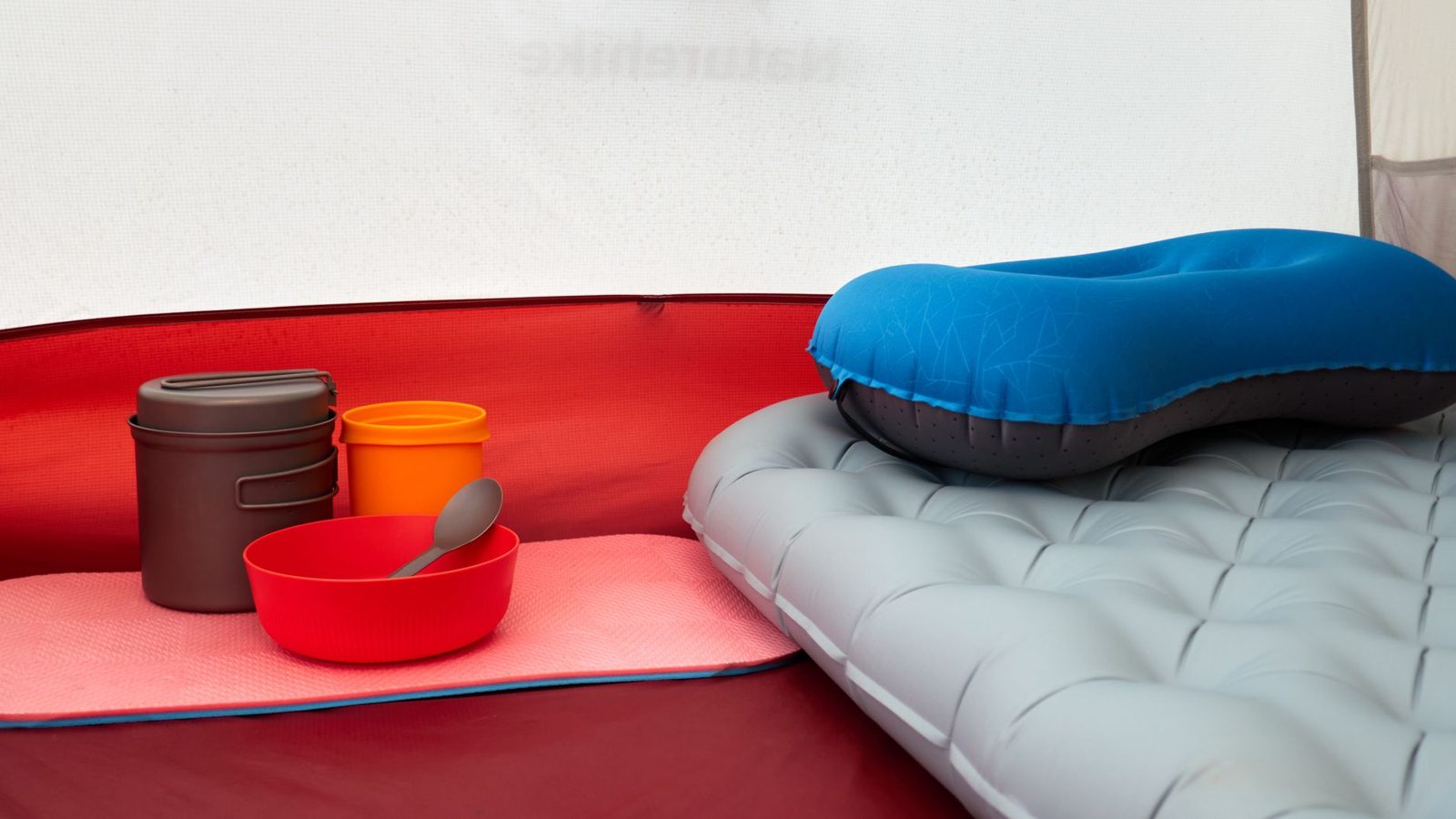
This is a self-inflating pad, which means it has foam inside that expands when you open the valve. It’s not the lightest, but for car camping, that doesn’t matter. It’s durable. I’ve seen the girls roll over it, sit on it, and even use it as a play mat during rainy afternoons.
The comfort level is solid. It’s about 1.5 inches thick, which is enough to cushion a hip bone against a root. The price is usually around $60. It’s not the cheapest, but it holds air better than the generic brands. If you have a leak, the patch kit actually works.
2. The Comfort King: Klymit Static V Luxe
This is an air pad, meaning it’s mostly just air pockets. It’s designed to be lightweight, but it’s thick enough for car camping. The V-shaped channels trap air to keep you warm. I love this one because it packs down small, so it doesn’t take up the whole trunk.
However, it requires blowing it up. With two kids, I sometimes forget to blow it up fully, and it feels flimsy. But once it’s inflated, it’s very comfortable. It’s usually around $70. It punches above its weight in terms of warmth, but the puncture risk is higher than the foam pads.
- Warm
- Packs small
- Needs blowing up
- Puncture risk
3. The Best Value: Teton Sports Comfort Deluxe
This is the one I recommend if you are really stretching the dollar. It’s a self-inflating pad that is thick and heavy. It feels like a real mattress. I bought this for Margo’s birthday last year, and she slept through the night for the first time in a tent.
It’s bulky, but for car camping, that’s fine. It’s usually around $45 to $50. The downside is it takes a while to self-inflate, and you have to open the valve and wait. But for the price, the comfort is unbeatable. It’s the definition of a cheap sleeping pad for car camping that doesn’t feel cheap.
- Thick
- Self-inflating
- Bulky
- Slow to inflate
4. The Skip: Generic Amazon Air Pads
There are dozens of pads on Amazon for under $25 that look like the big brands. They are thin, shiny, and promise “ultra comfort.” I bought one of these once. It popped on the second night. Not a big leak, just a slow hiss that woke us up at 3 AM.
The material is too thin to resist a twig or a pebble. With kids, you never know what will end up under the tent. If you buy one of these, buy a footprint or a tarp to put underneath it. But honestly, if you’re going to spend the extra $20 to get a name brand, you save the headache of the repair kit.
Inflation Nightmares: Mouth vs. Pump
One thing nobody tells you about air pads is the effort required to get them ready. For a family of four, that means four pads. If you have to blow them up with your mouth, you’re going to be tired before you even get into your sleeping bag.
The self-inflating pads (like the Teton and Therm-a-Rest) are much easier. You open the valve, let them expand for a few minutes, and then top them off with a few breaths. It saves time and energy. If you choose an air pad, look for one that comes with a small pump sack. It’s a bag you fill with air and then press onto the valve. It’s much faster than blowing into a tube.
I learned this the hard way when Junie got a cold and couldn’t blow up her pad. We ended up using a small battery-powered pump we already had for the air mattress. It’s a good backup to keep in the car.
Durability: Surviving the Kids
The biggest test for any gear with kids is how it handles abuse. Junie is eight, and Margo is eleven. They don’t treat gear with kid gloves. They jump on the sleeping pads. They use them as mats for art projects. They drag them over gravel.
The self-inflating pads handle this better. The foam inside provides structure even if the outer shell gets a small scratch. Air pads rely entirely on the integrity of the fabric. If you get a puncture, the whole thing goes flat.
I always tell parents to bring a repair kit. It’s a small patch and some glue. It costs about $5. Keep it in the tent with the sleeping bags. If you hear a hiss, patch it immediately. Don’t wait until morning.
Storage and Pack Size
Since we are car camping, pack size isn’t a huge deal, but trunk space is. The Teton Sports pad is huge when packed. It takes up a significant chunk of the trunk. If you have a small car, you might need to choose a pad that packs smaller, like the Klymit.
I recommend measuring your trunk space before you buy. If you have a hatchback, you can probably fit the bulky pads. If you have a sedan, you might need to sacrifice trunk space for comfort. It’s a trade-off. I usually put the pads in the back seat if the trunk is full of coolers and food.
What I’d Actually Buy
If I were starting over today, knowing what I know about the girls and our budget, here is my shopping list. This isn’t just about picking the cheapest item; it’s about strategic spending. When you’re watching every dollar, you have to decide where the comfort matters most.
For the adults, I’d get the Therm-a-Rest Trail Scout. It’s reliable, durable, and holds its shape well. As a single mom, my back takes the brunt of the day—lifting kids, carrying coolers, setting up camp. I need a pad that gives me solid support so I’m not waking up stiff and sore. It’s not the cheapest option, but it’s the one I trust to last for years.
For the kids, I’d get the Teton Sports Comfort Deluxe. It’s cheaper, and since they are smaller, the bulk isn’t as much of an issue. Plus, the extra thickness helps them sleep better, which means they are happier in the morning. A well-rested kid is a patient kid, and that is worth its weight in gold when you’re camping.
The total cost would be around $150 for the family. That’s less than one night at a motel with two kids. It’s an investment that pays off every time you pull into a campsite. If you can only afford one upgrade, put it on the adult pad. A grumpy mom makes for a grumpy trip. But if you can stretch the budget, get the Teton for the girls. They sleep like rocks, but they need that cushion too.
Here is the breakdown of why this combination works for a budget family:
- Prioritize Adult Support: Your spine needs the best protection. If you are in pain, the whole trip suffers.
- Maximize Kid Comfort: Kids move around more. A thicker pad prevents them from feeling the ground, which helps them stay asleep longer.
- Long-Term Value: Spending $150 now means you won’t have to replace cheap pads every season. The Teton and Therm-a-Rest are built to survive the abuse of kids and the elements.
FAQ: Your Questions Answered
1. Do I need a sleeping pad if I have a thick sleeping bag? Yes. A sleeping bag insulates you from the air, but the ground sucks heat from your body. Without a pad, you’ll feel cold even in a warm bag.
2. How do I clean a sleeping pad? Wipe it down with a damp cloth and mild soap. Let it dry completely before storing it. If you store it rolled up tight, the foam can lose its loft.
3. Can I use a regular mattress topper instead? You can, but it’s heavy and bulky. A foam topper is great for car camping if you have the space. It’s very durable and cheap.
4. What if the pad gets wet? Self-inflating pads can get wet on the outside, but the foam inside stays dry. Air pads are waterproof. Just make sure to dry them out before packing them away to prevent mold.
5. Is it worth spending more than $50? For car camping, $50 is usually enough. If you spend more, you’re paying for weight savings or extreme warmth, which you might not need.
6. How do I fix a leak? Use the repair kit. Clean the area, apply the glue, and let it dry for an hour. It’s usually a permanent fix.
Final Thoughts
Camping is about making memories, not about suffering through a bad night’s sleep. When the girls are well-rested, they are more patient, more curious, and more willing to explore. A good sleeping pad is one of the best investments you can make for your family’s outdoor experience.
You don’t need the most expensive gear to have a good time. You just need gear that works. The Teton Sports Comfort Deluxe is my top pick for value, and the Klymit Static V Luxe is great if you need something that packs smaller. Avoid the no-name brands unless you’re willing to risk a puncture.
I hope this helps you find the right pad for your family. Get out there, set up camp, and enjoy the quiet of the woods. And if you wake up sore, remember: it’s just a reminder to upgrade your gear next time.
See you on the trail,
Penny