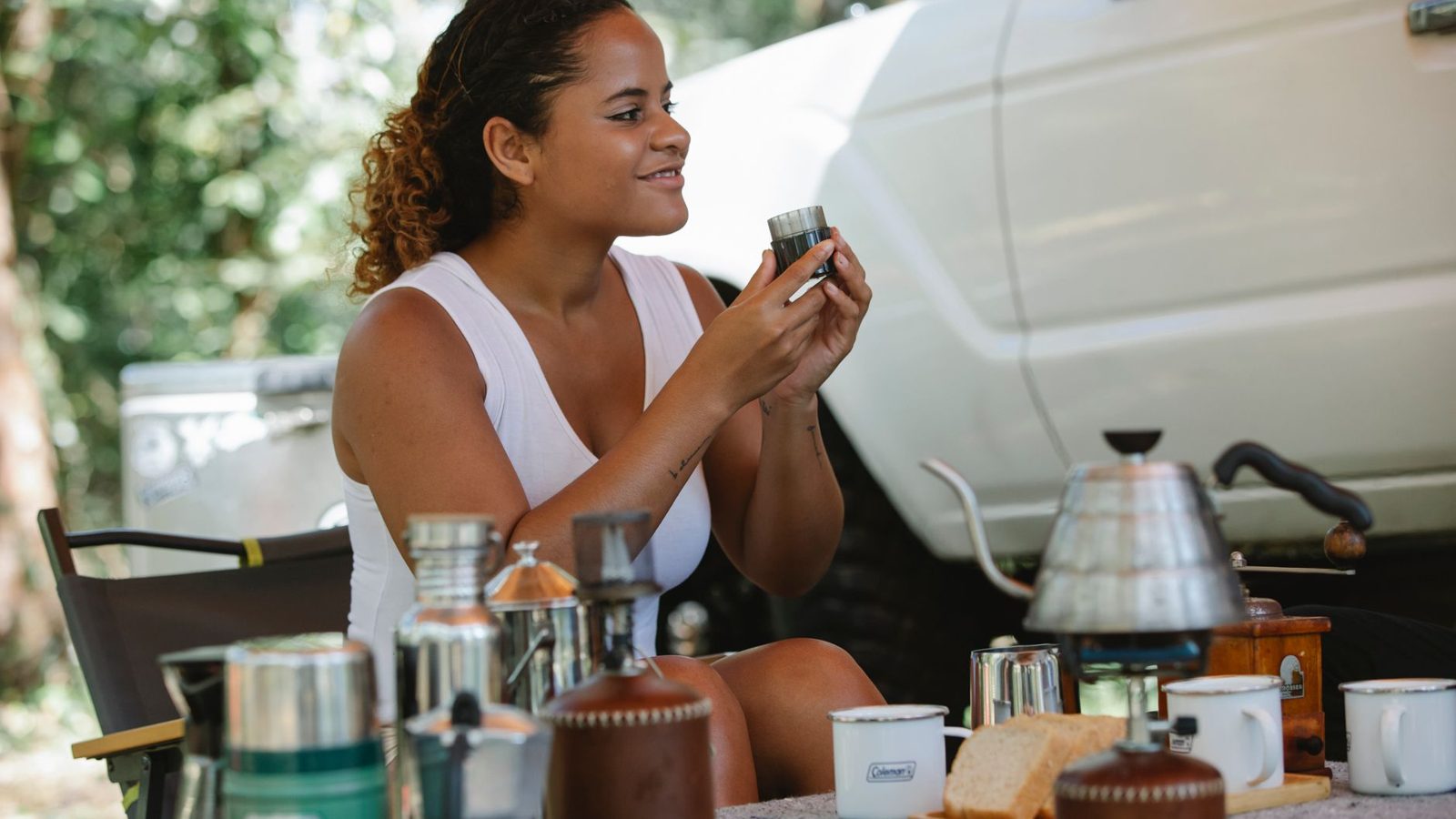
There is nothing quite like the silence of a campsite at 6 AM, except for the silence of a campsite at 6 AM when your coffee pot is empty and your girls are waking up. That’s the moment I learned that cheap camping coffee makers under $30 aren’t just about saving money—they’re about survival.
The Mom Math of Morning Coffee
When Junie and Margo were little, I thought camping meant roughing it. We’d sleep on the ground, eat cold beans, and drink water from the tap. But after a few trips where the girls were cranky before the sun was even up, I realized that a hot cup of coffee wasn’t a luxury; it was the fuel that kept me patient enough to handle a spilled juice box or a scraped knee.
The problem with camping gear, especially on a single income, is the price tag. You walk into a store, see a coffee maker for $15, and your heart skips a beat. But then you get home, set it up, and realize it’s made of plastic that melts if you look at it wrong, or glass that shatters if a kid bumps the table. That’s the false economy I want to help you avoid.
I’ve spent years testing gear on the road from Chattanooga to the Smokies and beyond. I’ve learned that “cheap” doesn’t have to mean “disposable.” It just means you have to be smarter about what you buy. The goal here isn’t to find the absolute cheapest item on the shelf; it’s to find the gear that gives you the most bang for your buck without requiring a trip to the hardware store to fix it.
The Danger of “Too Cheap”
Let’s talk about the $10 coffee maker. You’ve seen them. They’re often made of thin plastic or flimsy aluminum. They look great in the catalog, but they don’t survive the chaos of a family campsite.
I remember buying a pour-over cone once that cost less than a sandwich. It worked fine the first time. The second time, the plastic hinge snapped when I tried to pack it away. The third time, the filter basket warped, and the grounds ended up in my cup. By the time I realized I needed to replace it, I had spent more on three $10 cones than I would have on one $30 durable one.
For families, durability is the real metric of value. If a gear item lasts for five years of weekend trips, the cost per use drops to pennies. If it breaks in one weekend, the cost per use is high, and the frustration is higher. When you are camping with kids, you need gear that can be dropped, bumped, and cleaned with a wet rag without falling apart.
Method 1: The Stovetop Percolator
This is the classic choice. You put water in the bottom, coffee grounds in the basket, and set it on the camp stove. It’s loud, it bubbles, and it makes a strong pot of coffee.
Why it works for families: It’s nearly indestructible. I’ve had my Coleman percolator for six years. It’s been dropped in the dirt, knocked over by Margo, and left in the rain. It still works. It makes a lot of coffee at once, which is great when you have a family to feed. It doesn’t require electricity, so it works anywhere you have a fire or a stove.
The downside: It can be tricky to control the strength. If you leave it on the heat too long, it gets bitter. Also, cleaning it can be a pain if you have to scrub the basket at the campsite. But for the price, it’s hard to beat.
- Durable metal construction
- Makes a full pot
- No electricity needed
- Can make bitter coffee if over-boiled
- Heavy to carry
Method 2: The French Press
If you prefer a smoother cup without the metallic taste of a percolator, a French press is the way to go. You steep the grounds in hot water and press them down.
Why it works for families: It’s simple. There are no moving parts to break. You just pour hot water, wait, and press. It’s also easy to clean—just dump the grounds and rinse. I like the Primula model because it’s made of stainless steel, which means if Junie knocks it over, it dents but doesn’t shatter like glass.
The downside: It doesn’t keep coffee hot for long. If you’re drinking it slowly while the kids play, it gets cold. Also, you need to be careful with the plunger. If the seal is loose, you get grounds in your cup. But for the price, it’s a solid choice for a calm morning.
- Stainless steel body
- Easy to clean
- Good insulation
- Coffee cools down quickly
- Plunger can leak if worn
Method 3: The Pour-Over Cone
This is the minimalist choice. You put a filter in a cone, add grounds, and pour hot water over it. It’s light and takes up almost no space.
Why it works for families: It’s great for car camping where space is tight. You can pack it in a small bag. It makes a clean cup of coffee without the sediment of a French press. If you’re hiking to a spot and only need one or two cups, this is the best option.
The downside: It requires a steady hand. If you’re pouring water and a kid runs by, you can spill the whole pot. Also, you need to buy paper filters, which adds to the cost over time. The GSI Outdoors version is metal, so it’s more durable than the plastic ones, but it’s still delicate.
- Compact size
- Metal construction
- Clean taste
- Requires steady pouring
- Needs paper filters
Method 4: The Moka Pot
This is for the espresso lovers. It uses steam pressure to brew strong coffee. It’s small and makes a concentrated brew.
Why it works for families: It’s tiny. It fits in a backpack. It makes a strong coffee that lasts a long time. If you’re camping with a small stove, this is a good option because it uses less fuel than a big percolator.
The downside: It can be dangerous. The handle gets hot, and if you don’t know how to use it, you can burn yourself. It’s also not great for making a full pot for the whole family. It’s more for individual cups. But if you love strong coffee, it’s worth the extra care.
Method 5: The “Skip It” Option
There are a lot of cheap camping coffee makers under $30 that are just… bad. I’m talking about the generic plastic pour-over cones that come with a flimsy filter.
Why to skip it: The plastic warps in the heat. The filter tears easily. And when you try to clean it, the grounds get stuck in the crevices. It’s fine for a one-time trip, but if you’re camping every weekend, you’ll end up replacing it. Save your money for a metal version or a percolator.
Safety and Cleaning: The Real Cost
When you’re camping with kids, safety is the first thing you think about. Hot coffee is dangerous. A percolator or French press can tip over easily. I always make sure my coffee pot is on a stable surface, away from where the girls are playing.
Cleaning is the second thing. At the campsite, you don’t always have soap and water. I keep a small bottle of dish soap and a sponge in my gear bag. For the percolator, I rinse it out with hot water and let it air dry. For the French press, I dump the grounds in the trash and rinse the plunger.
The key is to not let the coffee sit. If you leave it overnight, it stains and smells. I always make sure to clean my gear before we pack up. It takes five minutes, but it saves you from a smelly bag later.
Budgeting for the Long Haul
Here’s the thing about budget gear: you have to plan for the long haul. If you buy a $15 coffee maker that lasts two years, that’s $7.50 a year. If you buy a $30 one that lasts ten years, that’s $3 a year.
I always tell my friends to spend a little more on the things you use every day. Coffee is something you use every morning. It’s worth investing in a good pot. But you can save money on other things, like plates or cups. You don’t need fancy mugs. You just need something that holds liquid.
FAQ
1. Can I use regular ground coffee in these makers? Yes, most of these work with standard ground coffee. Just make sure the grind is right for the method. Percolators need coarse grounds, while pour-overs need medium.
2. Do I need a special stove for these? Most work on any camp stove. Just make sure the pot fits on the burner. If you have a small stove, a Moka pot is better than a big percolator.
3. How do I keep coffee hot without a thermos? Wrap the pot in a towel. It’s not perfect, but it helps. Or, just make coffee in small batches so it doesn’t sit around.
4. Is it worth buying a battery-powered coffee maker? Only if you have a power station. They’re heavy and need charging. For most families, a manual method is better.
5. How do I clean the grounds without a trash can? Bring a small bag for trash. Dump the grounds in the bag, not on the ground. It’s better for the environment and keeps the campsite clean.
6. What if I forget my coffee maker? You can make coffee in a pot and strain it with a cloth. It’s not perfect, but it works in a pinch.
A Final Note from Penny
Camping is about more than just the gear. It’s about the time you spend with your family, the stories you tell, and the memories you make. But having a good cup of coffee in the morning makes all of that a little easier.
I hope this list helps you find something that works for your family. Don’t stress about spending too much. Just find something that works, and enjoy the morning.
Love, Penny