The morning the wind knocked over our stove, we were eating cold oatmeal in a parking lot off I-75. Junie was six, Margo was nine, and I was trying to convince them that “camping food” was supposed to be cold. That was the moment I realized a cheap stove wasn’t just about saving money; it was about saving the mood. If you’re like me, you’re trying to stretch every dollar so you can actually get out of the house without breaking the bank. You don’t need a $200 precision burner; you need something that won’t quit when a kid bumps the leg or the wind picks up.
I’ve spent the last five years testing everything from gas station specials to name-brand campers. I’ve learned that the “best budget camping stove under 50” isn’t always the cheapest one you can find. Sometimes, spending an extra ten bucks saves you from buying a replacement in six months. Here is what actually works for a family on a budget, without the fluff.
Why Cheap Stoves Fail (And How to Avoid It)
When you’re camping with two energetic girls, a stove isn’t just a tool; it’s the center of camp life. It’s where we make pancakes on Saturday mornings and where we boil water for hot chocolate when the nights get chilly. I learned the hard way that “budget” doesn’t mean “disposable.” There is a difference between a smart save and a false economy.
The biggest issue with ultra-cheap stoves is stability. If the legs are flimsy, a bump from a backpack or a curious hand can tip a pot of boiling water. That’s a burn waiting to happen. I remember one trip where Margo leaned against a wobbly leg, and we lost a whole pot of coffee. It wasn’t just the coffee; it was the frustration of having to clean up hot grounds in the dirt. The second issue is wind resistance. Many cheap stoves lack proper wind guards, meaning you burn through fuel twice as fast trying to keep the flame lit. Finally, there’s the cleaning factor. If the grates rust or the grease tray is impossible to remove, you’re stuck scrubbing with a wet paper towel in the dark.
For this guide, I looked for stoves that balance cost with safety. I prioritized models that have sturdy legs, decent wind protection, and parts that are easy to clean. I also considered fuel availability. You don’t want to be stranded because you need a specific fuel type that only exists at a specialty outdoor store.
 Photo: Tima Miroshnichenko
The Contenders: 5 Stoves Under $50
I narrowed the field down to five options that are widely available and consistently rated well by other families. These range from single-burner canister stoves to full two-burner propane setups. Each has a place in my gear bag, depending on where we are going and how much we plan to cook.
1. Gas One GS-4000 Two-Burner Propane Stove
This is the workhorse of the budget world. It’s a two-burner propane stove that usually sits right around the $45 to $50 mark. It’s not the prettiest thing, but it gets the job done. The burners are independent, which is crucial when you’re cooking breakfast. You can have coffee on one side and eggs on the other.
The build quality is decent for the price. The legs are foldable but feel solid enough to hold a heavy cast iron skillet. It comes with a carrying case, which is a huge plus for storage in the minivan. The only downside is that it can be a bit heavy to carry long distances, but for car camping, it’s perfect. I’ve used this on dozens of weekends, and it hasn’t let me down yet.
- Independent burners
- sturdy legs
- includes case
- Heavy for backpacking
- wind guards are basic
2. Coleman Classic Propane Stove
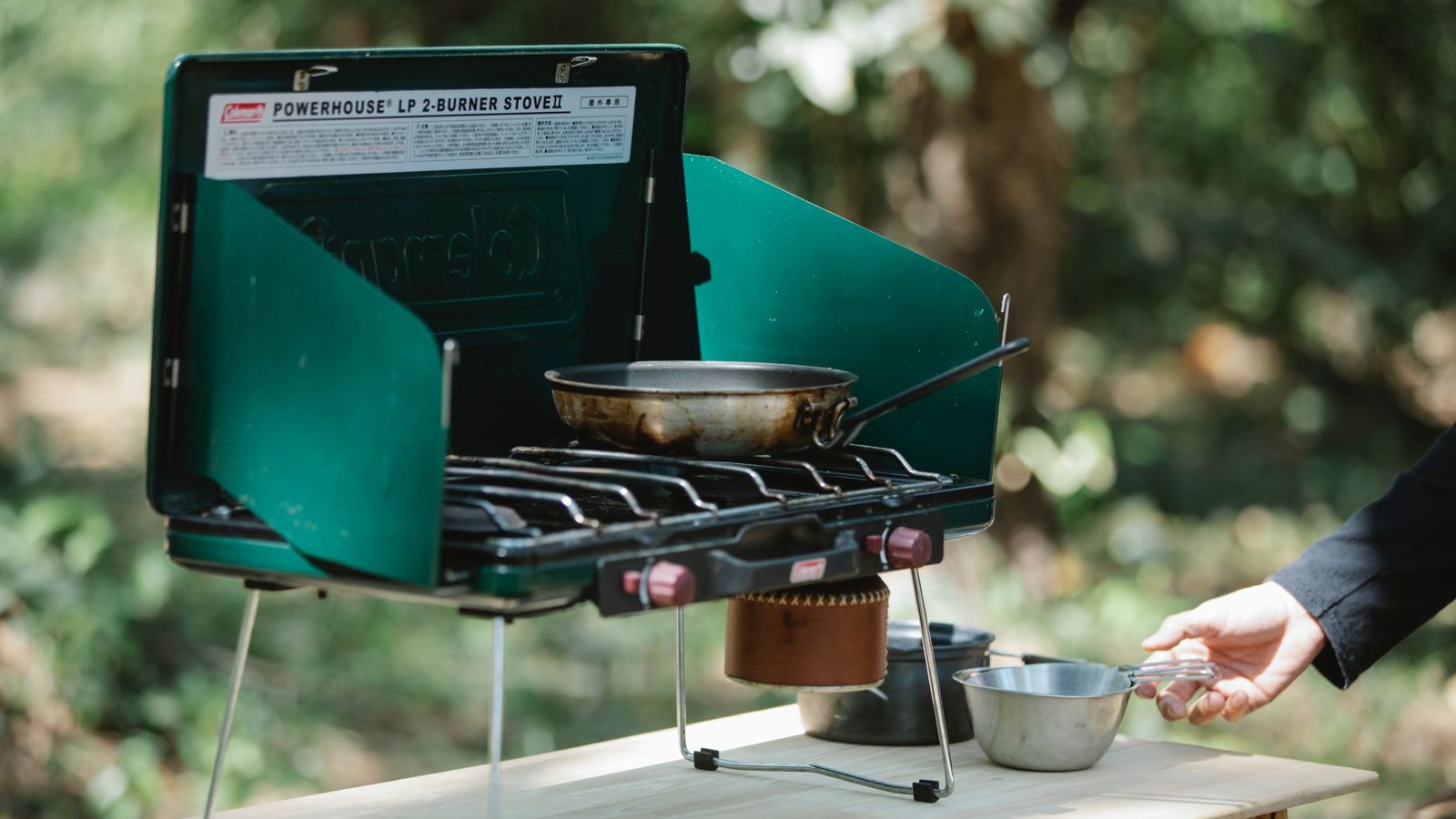
Coleman is the name most people know, and for good reason. The Classic Propane Stove is a staple in many campsites. It’s often found on sale for under $50, sometimes dipping to $40. It’s a two-burner setup that runs on standard 16.4 oz propane cylinders.
I’ve used this model for years. It’s reliable, but the finish can chip easily if you’re not careful. The burners are powerful, but they don’t have the fine-tuning control of more expensive models. You can turn it down, but it’s not always precise. However, for boiling water or frying bacon, it works perfectly. The wind guards are integrated into the design, which helps protect the flame. It’s a classic for a reason, but the Gas One feels slightly sturdier in my hands.
- Widely available fuel
- durable construction
- easy to clean
- Finish chips easily
- heavy
3. Stansport Outfitter 2-Burner Stove
If you need to save every penny, this is the one. It’s often priced around $35. It’s a no-frills two-burner propane stove. It looks a bit more plastic-y than the Coleman or Gas One, but it functions well for basic cooking.
The legs are a bit thinner, so you have to be careful where you place it. I recommend putting it on a flat, stable surface like a picnic table rather than directly on the ground. It’s great for short trips where you just need to heat up a meal. However, for a week-long trip with heavy cooking, I’d worry about the longevity of the hinges. It’s a good backup if your main stove breaks, but I wouldn’t make it my primary choice for a family of four.
- Very affordable
- lightweight
- compact
- Legs feel flimsy
- less wind protection
4. Etekcity Ultralight Portable Camping Stove
Not every trip requires a two-burner setup. Sometimes, we just need to boil water for coffee or reheat a burrito. This is where a canister stove shines. The Etekcity is incredibly small and lightweight, costing around $20. It fits in my pocket, which is amazing when we’re hiking to a secluded spot.
It’s perfect for backpacking or if you’re staying in a tent and want to save space. It uses small 100g canisters. The downside is fuel cost. Those little canisters add up quickly if you’re cooking full meals. But for a weekend trip where you’re just making coffee and oatmeal, it’s unbeatable for value and portability. I keep one in my emergency kit just in case the main stove fails. Just be careful with the flame; it’s tiny and easy to lose in the wind.
- Tiny footprint
- easy ignition
- cheap unit cost
- Canister fuel adds up
- less stable for heavy pots
5. Camp Chef Single Burner Propane Stove
This is my “sidekick” stove. It’s a single burner that runs on a 20lb propane tank (the big green ones). It costs around $30. I use this when I want to use my big cast iron skillet without worrying about the two-burner grate spacing.
It’s incredibly stable because it sits on the ground. It’s also very fuel-efficient because it draws from the larger tank. If you already own a 20lb tank for your grill, this is a no-brainer. It’s not portable in the backpack sense, but it’s great for car camping where you have a trunk full of gear. The connection hose is secure, which gives me peace of mind with the kids running around. It’s the most economical choice for long-term camping.
- Uses large tank
- very stable
- high BTU
- Requires hose/tank
- not backpackable
 Photo: K
Fuel Efficiency and Real-World Costs
One of the biggest hidden costs of camping is fuel. I used to think propane was cheap until I started tracking it. A 16.4 oz cylinder costs about $5 to $7. If you’re cooking three meals a day for a family of four, you might go through two of those in a weekend. That’s $14 just for fuel.
In contrast, a 20lb propane tank costs about $20 to fill and can last for weeks of camping. If you plan on camping often, the single-burner Camp Chef or a two-burner stove that uses 20lb tanks is more economical in the long run. However, you have to factor in the cost of the tank itself if you don’t own one.
Canister stoves like the Etekcity are convenient but expensive per meal. A 100g canister is about $3 and might last you two days of light cooking. If you’re boiling water for pasta, it’s gone in an hour. For budget camping, I recommend sticking with propane cylinders or 20lb tanks for the main cooking, and keeping a canister stove for emergencies or quick coffee. It’s about matching the fuel type to the trip length.
Durability and Safety with Kids
Safety is my number one priority. When Junie and Margo are running around, the stove is a hazard zone. I always set up a “no-go zone” around the stove, but accidents happen.
The Gas One and Coleman stoves have better stability than the Stansport. The legs are wider, and the body is heavier, making it harder to tip over. I also look for stoves with built-in wind guards. Wind can blow out a flame, causing gas to build up. If the wind guard is flimsy, it bends easily. I’ve bent the guards on cheaper models just by brushing against them.
Cleaning is another safety factor. Grease buildup can cause flare-ups. The Coleman and Gas One have removable grease trays. This makes cleanup easy with a wet wipe. The Stansport has a tray, but it’s harder to remove. I always let the stove cool completely before packing it away. Packing a hot stove is a recipe for melted gear in your bag. With the Camp Chef, the hose connection is secure, but I always check it before lighting to ensure no leaks.
What I’d Actually Buy
If I had to choose just one stove for our family trips, I’d grab the Gas One GS-4000. It hits the sweet spot of price and performance. It’s sturdy enough to handle the chaos of two kids, and the two burners mean I can cook dinner faster. The price is usually under $50, especially if you catch a sale.
If you’re on a tighter budget, the Stansport is fine, but treat it gently. Don’t put heavy pots on the edges, and make sure the ground is flat. If you already have a 20lb propane tank, the Camp Chef Single Burner is the most cost-effective choice for fuel. It’s the best value for money if you camp frequently.
For backpacking or short hikes, the Etekcity is essential. It’s so light you barely notice it. But for car camping, stick with propane. It’s cheaper and lasts longer. I actually keep the Etekcity in my glovebox as a backup. It’s small enough that it doesn’t take up space, but it saves the day when the main stove runs out of fuel.
FAQ
Q: Is a two-burner stove worth it for one person? A: If you’re cooking full meals, yes. You can boil water on one side while frying eggs on the other. It saves time and fuel. If you’re just boiling water for coffee, a single burner is fine.
Q: How long does a 16.4 oz propane cylinder last? A: On high heat, about 1 to 2 hours. On medium heat, maybe 3 to 4 hours. For a weekend trip with three meals a day, you’ll likely need two cylinders.
Q: Can I use these stoves indoors? A: Only if they are designed for it. Most propane stoves are for outdoors. If you use them in a tent or cabin, ensure there is plenty of ventilation to avoid carbon monoxide buildup.
Q: What’s the best way to clean a camping stove? A: Let it cool, remove the grates, and scrub with warm soapy water. Use a wire brush for the burner ports. Wipe the body with a damp cloth. Don’t submerge the whole unit unless the manual says it’s safe.
Q: Are these stoves safe for cast iron cookware? A: Yes, but check the weight limit. The Gas One and Coleman can handle cast iron. The Stansport might struggle with very heavy skillets.
Q: Do I need a windscreen? A: Most come with one, but it’s often flimsy. I recommend buying a separate aluminum windscreen if you camp in windy areas. It protects the flame and saves fuel.
Final Thoughts
Camping shouldn’t cost a fortune, and it shouldn’t leave you eating cold food because your gear failed. The Gas One GS-4000 is the best budget camping stove under 50 for most families. It balances cost, durability, and safety. But don’t be afraid to spend a little extra on fuel efficiency or stability if it means a better experience for your kids.
Remember, the goal is to get outside and make memories. Whether you’re making pancakes on a Coleman or boiling water on an Etekcity, the best meal is the one you share together. Happy camping, and keep stretching that dollar.
— Penny